


Depreciation vs. Capital Loss: The Ultimate Guide for Indian Business Owners
💡 30-Second Summary
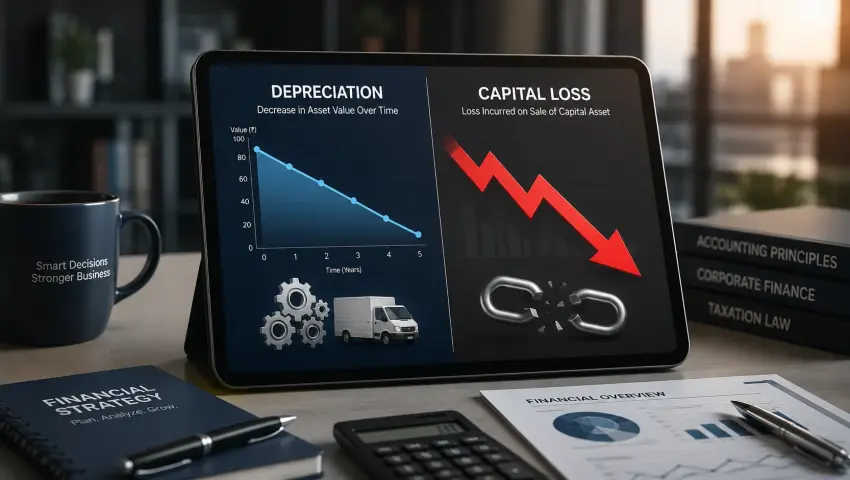
While both depreciation and capital loss reduce your asset value, confusing the two can lead to severe tax penalties and skewed profit margins. Depreciation is the gradual decline in an asset's value due to usage, whereas a capital loss occurs when an asset is sold for less than its actual worth. At Pragyantra, we help SMEs automate these complex accounting classifications within TallyPrime, ensuring 100% tax compliance and real-time financial accuracy.
Business assets are not permanent. The machinery driving your production wears out, office computers become obsolete, and delivery vehicles lose value with every kilometer driven. Furthermore, businesses sometimes must liquidate assets or investments at a loss due to shifting market conditions.
⚠️ Because both scenarios involve a decline in financial value, many SME owners mistakenly treat them as the same thing. However, in the eyes of the **Income Tax Department** and your balance sheet, depreciation and capital loss are entirely different.
For business owners, understanding this difference isn't just theory—it is critical. Incorrect classification directly impacts your reported profits, tax liabilities, and overall business valuation.
The Core Difference: Depreciation vs. Capital Loss
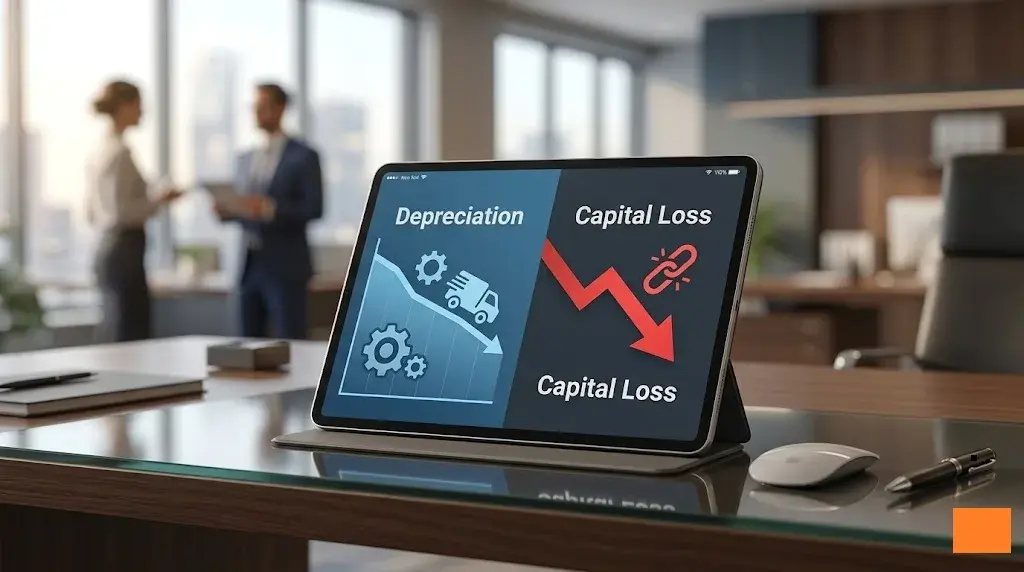
The confusion arises because both events reduce the reported value of assets in your financial records. The key is to look at **why** the reduction happened: Depreciation happens naturally while you are actively using the asset; Capital loss only happens when you exit or dispose of it.
| Parameter | Depreciation | Capital Loss |
|---|---|---|
| Meaning | Gradual reduction in asset value over its useful life. | Loss arising from the sale/transfer of an asset. |
| Trigger | Regular usage, aging, or obsolescence. | Selling at a value lower than written-down value. |
| Frequency | Recorded systematically every financial year. | Occurs only once, at the time of sale. |
| Impact on Profit | Consistent, gradual tax benefits annually. | Reduces profit strictly in the year of sale. |
What is Depreciation?
Depreciation is not a cash expense; it is an accounting mechanism that maps the gradual decrease in a fixed asset's value. Instead of taking a massive hit to your profits by recording the full cost of a machine in the year you bought it, you spread that cost across the machine's useful life.
📊 Real-World Example:
If your business purchases machinery worth ₹5 Lakhs with a 10-year lifespan, you charge a portion of that cost as depreciation annually. This aligns the cost of the asset with the revenue it generates each year.
✅ Common Depreciable Assets:
- Manufacturing Machinery
- Office Furniture & Laptops
- Delivery Vehicles
The Core Difference: Depreciation vs. Capital Loss
The confusion arises because both events reduce the reported value of assets in your financial records. The key is to look at **why** the reduction happened: Depreciation happens naturally while you are actively using the asset; Capital loss only happens when you exit or dispose of it.
| Parameter | Depreciation | Capital Loss |
|---|---|---|
| Meaning | Gradual reduction in asset value over its useful life. | Loss arising from the sale/transfer of an asset. |
| Trigger | Regular usage, aging, or obsolescence. | Selling at a value lower than written-down value. |
| Frequency | Recorded systematically every financial year. | Occurs only once, at the time of sale. |
| Impact on Profit | Consistent, gradual tax benefits annually. | Reduces profit strictly in the year of sale. |
What is Depreciation?
Depreciation is not a cash expense; it is an accounting mechanism that maps the gradual decrease in a fixed asset's value. Instead of taking a massive hit to your profits by recording the full cost of a machine in the year you bought it, you spread that cost across the machine's useful life.
📊 Real-World Example:
If your business purchases machinery worth ₹5 Lakhs with a 10-year lifespan, you charge a portion of that cost as depreciation annually. This aligns the cost of the asset with the revenue it generates each year.
✅ Common Depreciable Assets:
- Manufacturing Machinery
- Office Furniture & Laptops
- Delivery Vehicles